
A remarkable subterranean ecosystem in Anbar is drawing renewed scientific attention
HADITHA, ANBAR — August 2026
Deep beneath the landscape of western Iraq, in an environment where sunlight never reaches, lives a creature that seems almost impossible to imagine: a pale, nearly translucent fish with no functional eyes.
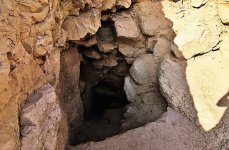
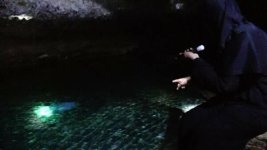
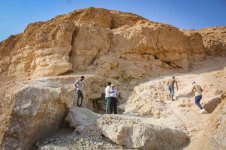
Iraqi authorities have recently renewed attention on an underground water cave in the Khisfa area near Haditha, Anbar Province, where rare blind cavefish inhabit subterranean waters connected to the Euphrates system. The discovery has sparked interest because of both the unusual fish and the potentially enormous underground water network in which they live. (دايلي بيروت - Daily Beirut)
 A world without sunlight
The fish found in these underground waters are adapted to a life of perpetual darkness.
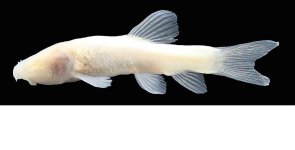
They are pale and semi-transparent, and their eyes are absent or non-functional. Rather than relying on sight, these fish have evolved to survive using other sensory abilities to navigate their surroundings and locate food.
According to preliminary reports, they may feed on bacteria and organic material transported through the underground water system. (دايلي بيروت - Daily Beirut)
This is an extraordinary example of evolution at work.
When an animal population becomes isolated in a completely dark environment for extremely long periods, maintaining complex organs such as eyes can become less advantageous. Over generations, natural selection can favor other adaptations while vision gradually disappears.
 The blind fish of Haditha
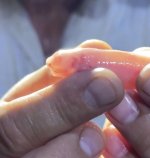
Representative photograph of Iraq’s blind cavefish, documented from the Haditha region. The photograph above is not being presented as a photograph from the August 2026 investigation. Scientific records identify blind cavefish from subterranean habitats around Haditha, including the Iraq blind barb Typhlogarra widdowsoni. (Convention on Biological Diversity)
 An underground water system stretching for more than 130 kilometres?
Perhaps even more intriguing than the fish is the underground water itself.
Initial assessments reported that the subterranean passage may extend more than 130 kilometres eastward and may be connected to the lower reaches of the Euphrates River. If confirmed through detailed geological and hydrological studies, the scale of this underground system could make the site particularly important for understanding the hidden water networks beneath western Iraq. (دايلي بيروت - Daily Beirut)
Researchers are expected to investigate the geology of the cave, the direction and extent of the underground watercourse, its relationship with regional groundwater and the Euphrates, and the organisms living within it.
 Not actually a “new” fish
There is an important distinction behind the headlines.
Although the recent reports describe the finding as a discovery, blind fish in the Khisfa/Haditha area are not unknown to Iraqi scientists.
Iraq’s Environment Directorate has indicated that sightings of blind fish in the area were recorded as far back as 2010. Scientific literature has also documented blind cavefish endemic to the Haditha region for decades. (دايلي بيروت - Daily Beirut)
A national biodiversity report to the Convention on Biological Diversity identifies two remarkable cavefish associated with subterranean habitats near Haditha: Typhlogarra widdowsoni and Caecocypris basimi. (Convention on Biological Diversity)
In other words, the truly exciting story may not be that Iraq has suddenly found a blind fish.
It is that a remarkable subterranean ecosystem that has existed largely hidden from the outside world is once again receiving scientific attention.
 A fragile ecosystem
The creatures living in these caves are particularly vulnerable because their entire habitat can be extremely restricted.
Previous scientific surveys have warned about the conservation status of Haditha’s cavefish. One biodiversity assessment described Typhlogarra widdowsoni as extremely rare and highlighted the difficulty of determining population numbers because of the inaccessibility of its subterranean habitat. (Convention on Biological Diversity)
That makes protecting the water system especially important.
Pollution, groundwater depletion, changes in river levels and human disturbance could potentially have consequences for organisms that have nowhere else to go.
Iraqi authorities have reportedly established controls around the site while specialized teams carry out water-quality testing, biological studies and documentation. (دايلي بيروت - Daily Beirut)
 Another reminder of Iraq’s hidden natural heritage
For many people, Iraq’s ancient civilizations immediately bring to mind Mesopotamia, Nineveh, Babylon, Ur and the great rivers of the Tigris and Euphrates.
But beneath that same landscape is another history—one written not by human civilization, but by evolution.
Blind fish surviving in complete darkness.
Underground rivers flowing beneath the desert.
Caves and sinkholes that may connect to vast hidden water networks.
And species found nowhere else on Earth.
The Haditha region has already been recognized by scientists as an important habitat for endemic subterranean fish. (Ramsar Sites Information Service)
The latest investigation could therefore reveal far more than a strange-looking fish.
It may give scientists another glimpse into a hidden ecosystem that has been evolving beneath Iraq for thousands—or potentially millions—of years.
What happens next?
The next stage will be scientific investigation.
Researchers will need to determine:
For now, one thing is certain:
There is still much of Iraq that remains unexplored—not only above the ground, but beneath it.
Assyrian Voice will continue following this fascinating discovery as more scientific information becomes available.
Source: Iraqi authorities and environmental officials, scientific biodiversity records, and documented research on the endemic cavefish of the Haditha region. (دايلي بيروت - Daily Beirut)

HADITHA, ANBAR — August 2026
Deep beneath the landscape of western Iraq, in an environment where sunlight never reaches, lives a creature that seems almost impossible to imagine: a pale, nearly translucent fish with no functional eyes.
Iraqi authorities have recently renewed attention on an underground water cave in the Khisfa area near Haditha, Anbar Province, where rare blind cavefish inhabit subterranean waters connected to the Euphrates system. The discovery has sparked interest because of both the unusual fish and the potentially enormous underground water network in which they live. (دايلي بيروت - Daily Beirut)
A world without sunlightThe fish found in these underground waters are adapted to a life of perpetual darkness.
They are pale and semi-transparent, and their eyes are absent or non-functional. Rather than relying on sight, these fish have evolved to survive using other sensory abilities to navigate their surroundings and locate food.
According to preliminary reports, they may feed on bacteria and organic material transported through the underground water system. (دايلي بيروت - Daily Beirut)
This is an extraordinary example of evolution at work.
When an animal population becomes isolated in a completely dark environment for extremely long periods, maintaining complex organs such as eyes can become less advantageous. Over generations, natural selection can favor other adaptations while vision gradually disappears.
The blind fish of HadithaRepresentative photograph of Iraq’s blind cavefish, documented from the Haditha region. The photograph above is not being presented as a photograph from the August 2026 investigation. Scientific records identify blind cavefish from subterranean habitats around Haditha, including the Iraq blind barb Typhlogarra widdowsoni. (Convention on Biological Diversity)
An underground water system stretching for more than 130 kilometres?Perhaps even more intriguing than the fish is the underground water itself.
Initial assessments reported that the subterranean passage may extend more than 130 kilometres eastward and may be connected to the lower reaches of the Euphrates River. If confirmed through detailed geological and hydrological studies, the scale of this underground system could make the site particularly important for understanding the hidden water networks beneath western Iraq. (دايلي بيروت - Daily Beirut)
Researchers are expected to investigate the geology of the cave, the direction and extent of the underground watercourse, its relationship with regional groundwater and the Euphrates, and the organisms living within it.
Not actually a “new” fishThere is an important distinction behind the headlines.
Although the recent reports describe the finding as a discovery, blind fish in the Khisfa/Haditha area are not unknown to Iraqi scientists.
Iraq’s Environment Directorate has indicated that sightings of blind fish in the area were recorded as far back as 2010. Scientific literature has also documented blind cavefish endemic to the Haditha region for decades. (دايلي بيروت - Daily Beirut)
A national biodiversity report to the Convention on Biological Diversity identifies two remarkable cavefish associated with subterranean habitats near Haditha: Typhlogarra widdowsoni and Caecocypris basimi. (Convention on Biological Diversity)
In other words, the truly exciting story may not be that Iraq has suddenly found a blind fish.
It is that a remarkable subterranean ecosystem that has existed largely hidden from the outside world is once again receiving scientific attention.
A fragile ecosystemThe creatures living in these caves are particularly vulnerable because their entire habitat can be extremely restricted.
Previous scientific surveys have warned about the conservation status of Haditha’s cavefish. One biodiversity assessment described Typhlogarra widdowsoni as extremely rare and highlighted the difficulty of determining population numbers because of the inaccessibility of its subterranean habitat. (Convention on Biological Diversity)
That makes protecting the water system especially important.
Pollution, groundwater depletion, changes in river levels and human disturbance could potentially have consequences for organisms that have nowhere else to go.
Iraqi authorities have reportedly established controls around the site while specialized teams carry out water-quality testing, biological studies and documentation. (دايلي بيروت - Daily Beirut)
Another reminder of Iraq’s hidden natural heritageFor many people, Iraq’s ancient civilizations immediately bring to mind Mesopotamia, Nineveh, Babylon, Ur and the great rivers of the Tigris and Euphrates.
But beneath that same landscape is another history—one written not by human civilization, but by evolution.
Blind fish surviving in complete darkness.
Underground rivers flowing beneath the desert.
Caves and sinkholes that may connect to vast hidden water networks.
And species found nowhere else on Earth.
The Haditha region has already been recognized by scientists as an important habitat for endemic subterranean fish. (Ramsar Sites Information Service)
The latest investigation could therefore reveal far more than a strange-looking fish.
It may give scientists another glimpse into a hidden ecosystem that has been evolving beneath Iraq for thousands—or potentially millions—of years.
What happens next?
The next stage will be scientific investigation.
Researchers will need to determine:
- How extensive the underground water system actually is
- Whether the reported 130+ kilometre connection can be confirmed
- Exactly which fish species inhabit the system
- How the fish obtain food in complete darkness
- How the subterranean water connects with the Euphrates and regional groundwater
- How large the fish populations are
- And how this unique ecosystem can be protected
For now, one thing is certain:
There is still much of Iraq that remains unexplored—not only above the ground, but beneath it.
Assyrian Voice will continue following this fascinating discovery as more scientific information becomes available.
Source: Iraqi authorities and environmental officials, scientific biodiversity records, and documented research on the endemic cavefish of the Haditha region. (دايلي بيروت - Daily Beirut)